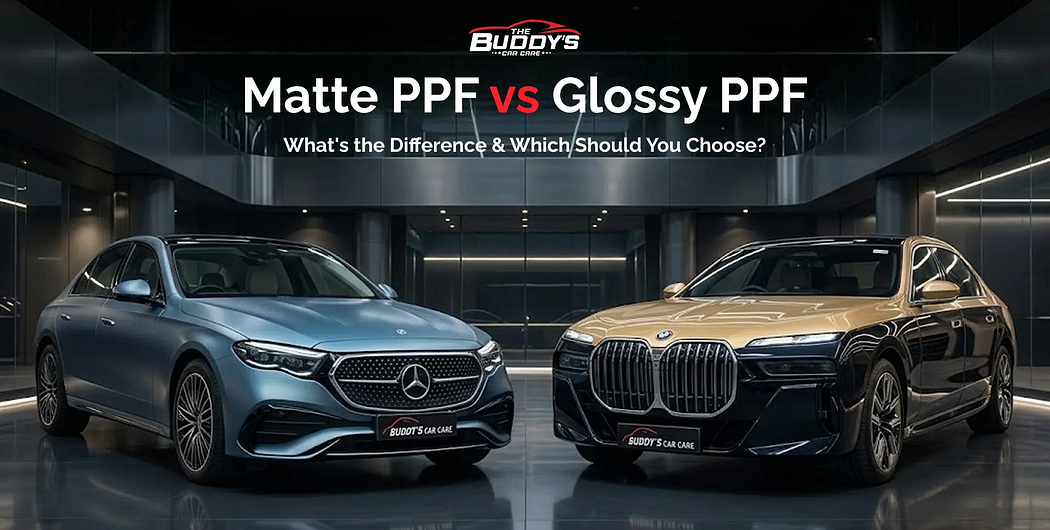
Matte PPF vs Glossy PPF — What’s the Difference & Which Should You Choose?
Blog Overview
Choosing between matte ppf vs glossy ppf goes beyond appearance. The finish you select affects how your car looks, how easy it is to maintain, and even how it may appeal to future buyers. While one preserves the factory shine, the other creates a more understated personality. Let’s understand which option suits your driving style and expectations.
What Is Paint Protection Film (PPF)?
Paint Protection Film (PPF) is a transparent polyurethane layer applied over a vehicle’s paint to protect it from scratches, stone chips, UV exposure, bird droppings, and everyday wear. Unlike the conventional wax and coatings, the PPF film serves as a sacrificial layer by taking the abuse rather than the underlying paint. Many premium PPF films also feature self healing technology, allowing minor swirl marks and scratches to disappear when exposed to heat, helping the paint maintain its appearance for years.
What Is Matte PPF?
Matte PPF provides a satin-like finish with low reflectivity, giving the vehicle a bold and distinctive appearance without altering the original paint color. Many owners choose matte PPF for cars because it creates a modern, stealth-inspired look while helping conceal fingerprints, dust, and minor swirl marks. It is a popular choice for those who want a unique road presence and a more understated style.
What Is Glossy PPF?
The ideal option for car owners who would like to maintain the factory paint yet have additional depth and brightness would be glossy PPF. A quality glossy paint protection film enhances color depth and delivers a rich, elegant finish.
With metallic colors, it adds more depth, while with dark colors it makes bright reflections. There is another factor which plays a big role in its popularity, versatility. Designed to enhance almost any color, this paint protection film looks equally impressive on hatchbacks, sedans, SUVs, and luxury vehicles.
Matte PPF vs Glossy PPF: Key Differences Explained
Appearance and Finish
Matte PPF: Transforms the vehicle’s look by scattering light waves, eliminating sharp reflections, and producing a sleek, frosted satin appearance
Glossy PPF: Preserves and amplifies the factory appearance by enhancing depth, delivering high reflectivity, and maintaining a traditional mirror like shine.
Paint Enhancement and Visual Impact
Matte PPF: Transforms the vehicle’s look by scattering light waves, eliminating sharp reflections, and producing a sleek, frosted satin appearance
Glossy PPF: Preserves and amplifies the factory appearance by enhancing depth, delivering high reflectivity, and maintaining a traditional mirror like shine.
Maintenance and Cleaning Requirements
Matte PPF: Demands specialized car shampoos devoid of gloss enhancers or waxes, though it hides light layers of road dust exceptionally well.
Glossy PPF: Compatible with standard premium detailing products, but requires careful washing to prevent surface contaminants from dulling the shine.
Scratch and Swirl Visibility
Matte PPF: Naturally masks fine swirl marks and micro-scratches due to its light diffusing surface texture.
Glossy PPF: Shows fine surface imperfections more easily under direct sunlight, though high quality films self-heal with ambient engine heat.
Cost and Value for Money
Matte PPF: Carries a higher price tag due to complex manufacturing and the precision required during installation to avoid edge seams.
Glossy PPF: Provides highly cost-effective, premium coverage with a slightly lower entry cost than its matte counterpart.
Resale Value Considerations
Matte PPF: Appeals heavily to a specific subset of buyers who love a customized, stealthy look, preserving immaculate paint beneath.
Glossy PPF: Appeals universally to the mass market, ensuring the original factory aesthetic looks untouched by road debris.
Which PPF Is Easier to Maintain?
Both finishes can be maintained easily, but there is some small difference in their maintenance processes. Glossy paint protection film works well with standard detailing products, but its reflective surface makes fingerprints, water spots, and swirl marks more noticeable.
Matte PPF hides these details and gives the car cleaner look between the washes. Owners who prefer low visual maintenance may find matte PPF more practical, while Glossy PPF appeals to owners who enjoy maintaining a deep, polished shine.
Does Matte PPF Last as Long as Glossy PPF?
Yes. The lifespan of paint protection film largely depends upon the quality of the film, how well it is installed and how much it is maintained but not on the nature of the coating itself. A high-quality film can serve for about five to ten years and also possesses self-healing capabilities which help reduce light scratches. Therefore, whether you go for matte or glossy coating doesn’t matter much in terms of longevity.
Regular cleaning and absence of harsh chemicals will also contribute to extending the film’s life span.
Which Cars Look Better With Matte PPF?
For vehicles with dynamic styling and darker hues, matte PPF provides a more elegant and individual look. Its satin finish creates a premium, understated look that gives the car a stronger road presence without changing the original color. It is especially popular among owners who want a distinctive appearance and prefer a modern, stealth inspired finish over traditional gloss. SUVs, luxury sedans, and performance cars often complement the sophisticated character of matte PPF.
When Should You Choose Glossy PPF Instead?
Glossy PPF remains the preferred choice for many car owners because it preserves the original appearance while adding extra depth and richness to the paint.
New Cars with Factory Paint
If you’ve recently purchased a new vehicle, glossy PPF helps maintain the same finish delivered by the manufacturer. It provides a transparent layer of protection while preserving the vehicle’s original design and aesthetics.
Owners Who Prefer Maximum Shine
Drivers who love deep reflections and a freshly polished look often gravitate towards glossy PPF. Metallic shades and vibrant colours especially benefit from the added brilliance.
Daily-Driven Vehicles
Cars used regularly encounter dust, stone chips, and changing weather conditions. Glossy PPF provides dependable protection while retaining a familiar appearance, making it an ideal solution for family cars and everyday commuters.
Matte PPF vs Glossy PPF: Which One Is Better for Indian Roads?
Dust particles, flying materials, intense sunshine, bird poop, and rainfall in India pose problems for cars. Luckily, both the finishes provide the same level of protection from these issues.
Those who frequently drive in urban areas may appreciate matte PPF, as its finish tends to conceal everyday dust and dirt more effectively. On the other hand, a gloss finish suits those individuals who like their cars to look new and shiny.
Common Mistakes Car Owners Make While Choosing PPF
Many buyers focus only on appearance and overlook factors that influence long term satisfaction. Some common mistakes include:
- Selecting a finish based solely on trends rather than personal preference.
- Choosing low-quality films to reduce installation costs.
- Ignoring the importance of professional application.
- Assuming matte and glossy PPF offer different levels of protection.
- Neglecting maintenance recommendations after installation.
- Failing to consider resale preferences and ownership duration.
Conclusion
When comparing matte PPF vs glossy PPF, there is no one-size-fits-all answer. Both finishes provide the same level of protection against everyday wear while helping preserve your vehicle’s paint and value. Matte PPF is ideal for owners who prefer a bold, understated look with fewer visible imperfections, whereas glossy PPF suits those who want to retain the factory shine and enjoy a classic, reflective finish.
Ultimately, the right choice depends on your personal style, maintenance preferences, and the kind of appearance you want your car to carry for years to come.
FAQs
01. How much does Matte PPF or Glossy PPF cost in Indore?
The cost depends on the vehicle size, coverage area, and film brand. In Indore, full body PPF installation generally starts from ₹40,000 and can exceed ₹15000+ for premium films. Matte PPF may cost slightly more due to its specialized finish and installation requirements.
02. Can Matte PPF be applied on a glossy paint finish?
Yes. Matte PPF can be installed over glossy factory paint without altering the original color. It transforms the surface into a satin like finish while preserving the paint underneath. If removed later, the vehicle regains its original glossy appearance.
03. Does Matte PPF become shiny over time?
No. Matte PPF is manufactured in such a way that its appearance does not change throughout the years. Nonetheless, improper care, polishing products or wax with gloss enhancing substances may influence it negatively. The use of cleaning products will ensure the maintenance of the initial appearance.
04. Can Glossy PPF hide minor scratches on the paint?
Glossy PPF is able to hide very small defects and prevent further scratching. Additionally, most high end film materials have the self healing feature which makes it possible to get rid of minor swirls after applying heat to the film. But if your paint has deeper scratches, then you should fix them first.
05. Which PPF finish is better for black cars: matte or glossy?
Both kinds of PPF look good on black vehicles. Nevertheless, they differ in appearance. While glossy PPF provides deep mirror shine, matte PPF has a bold stealth look. Which one suits better, depends on your preferences.
06. Can I remove PPF without damaging my car’s original paint?
Yes. Professionally installed paint protection film can usually be removed safely without harming the factory paint. Proper removal techniques are important, especially for older films. This is why removal should always be handled by experienced technicians.
07. How long does Matte PPF and Glossy PPF typically last?
Both matte and glossy PPF offer similar durability. High quality films generally last between five and ten years, depending on maintenance, driving conditions, and environmental exposure. Regular cleaning and proper care help maximize the lifespan of the film.
.jpg)
.jpg)

Comments
Post a Comment